Top 10 Things to Do in Budapest

Top 10 Things to Do in Budapest

Budapest is two historic urban halves joined across the Danube: hilly Buda on the west bank and flatter Pest on the east. Bridges, thermal springs and a dramatic riverfront shape the city as strongly as its individual monuments.

Explore All tours in Budapest, Hungary, Cycling tours in Budapest, Hungary.

Plan your adventure

Budapest skyline and downtown streets

Best ways to explore Budapest

Things to Do in Budapest

  1. Budapest skyline and downtown streets

    1. Hungarian Parliament Building

    The Hungarian Parliament Building stretches along the Pest bank of the Danube and is one of Europe's largest parliamentary complexes. Completed around the turn of the twentieth century, its Gothic Revival exterior and riverfront dome dominate central Budapest. Guided interior visits reveal the grand staircase, legislative chambers and Hungarian Crown Jewels. Walk at least part of Hungarian Parliament Building in both directions when practical, because changing sightlines across the water make the site especially useful for understanding Budapest's physical layout.

  2. Budapest neighborhoods and local culture

    2. Buda Castle and Castle Hill

    Castle Hill contains the former royal palace complex, medieval streets and major museums above the west bank of the Danube. Rebuilding across centuries means the district is a layered record of Hungarian royal, Habsburg and wartime history rather than a single-period castle. Walk the hill slowly because viewpoints open repeatedly toward Pest and the river. Treat Buda Castle and Castle Hill as a focused visit rather than trying to exhaust every gallery; check current timed-entry rules, temporary closures and the collections that matter most to you before arrival.

  3. Budapest skyline and downtown streets

    3. Fisherman's Bastion and Matthias Church

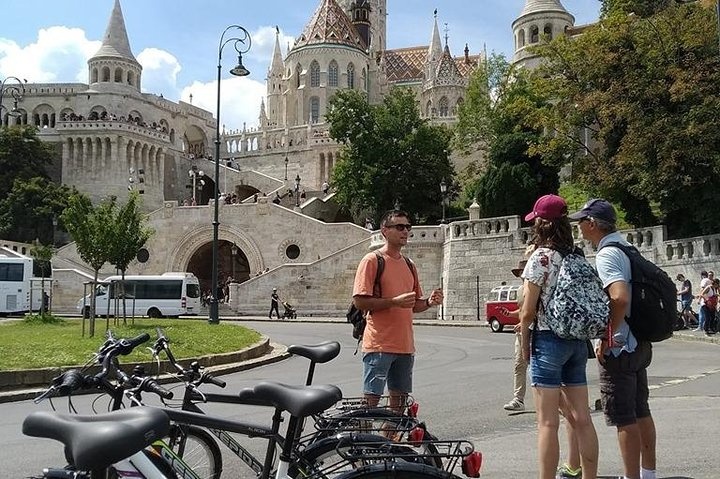
    Fisherman's Bastion is a late nineteenth-century terrace built beside the much older Matthias Church on Castle Hill. Its arcades frame some of the best views across the Danube to Parliament, while the church preserves a long history of coronations and reconstruction. The pair is most rewarding early or near dusk when the terrace is less congested. Because Fisherman's Bastion and Matthias Church is also a religious or ceremonial site, check current visiting hours, services, dress expectations and any separate tower, crypt or treasury access before building the day around it.

  4. Budapest neighborhoods and local culture

    4. Széchenyi Thermal Bath

    Széchenyi is one of Budapest's largest thermal-bath complexes and occupies a grand Neo-Baroque building in City Park. Indoor and outdoor pools are supplied by hot mineral water drawn from deep wells beneath the city. The visit is both architectural and social, showing how Budapest's geothermal resources became part of everyday urban culture. Use Széchenyi Thermal Bath as a genuine walking block rather than a drive-by stop, and check current weather, trail, access or seasonal conditions before setting out.

  5. Budapest skyline and downtown streets

    5. Great Market Hall

    The Great Market Hall opened in the late nineteenth century near the Pest end of Liberty Bridge. Its iron-and-brick interior remains an active food market with produce, meat, spices and prepared foods alongside visitor-oriented stalls. Go in the morning to see more of its ordinary market function before the busiest sightseeing period. Visit Great Market Hall earlier in the day if you want to see more of its working-market rhythm, then continue on foot into the surrounding streets instead of treating the market as an isolated food stop.

  6. Budapest neighborhoods and local culture

    6. Danube Promenade and Chain Bridge

    The central Danube embankments provide direct views between Buda Castle, Parliament and the bridges that physically unified the city. The Széchenyi Chain Bridge, opened in 1849, was the first permanent bridge linking Buda and Pest. Walking this river corridor after dark reveals why Budapest's illuminated skyline is inseparable from the Danube itself. If interiors are a priority, leave enough time for both the principal rooms and the surrounding grounds, because the scale and setting of Danube Promenade and Chain Bridge are part of the experience rather than scenery between photo stops.

Understand Budapest

Why Budapest is worth exploring

Castle Hill and older Buda occupy high ground above the river, while Parliament, boulevards and much of the commercial city spread across Pest. The thermal-bath tradition reflects natural hot springs beneath the region and is a living part of Budapest rather than a decorative historic theme.

How to plan Budapest

Walk Castle Hill and the Danube banks as linked districts, then use trams or Metro lines for baths, museums and farther neighborhoods. Evening river views are important enough to reserve time for rather than treating them as incidental transit.

Recommended itineraries

When to go

Spring and autumn are especially comfortable for riverfront walking. Summer is lively and warm, while winter is cold but pairs naturally with thermal baths and indoor cultural sites.

What to bring

Bring comfortable shoes, layers for river wind and swimwear if thermal baths are planned. A small towel and sandals may be useful depending on the bath complex and ticket type.

Tours & Experiences in Budapest

Budapest bike tour
Bike Tour

Budapest, Hungary

Budapest bike tour

Budapest bike tour is a guided cycling experience based in Budapest, Hungary for travelers who want to explore local highlights with an expert lead.

Off-Road E-Bike Tour in The Buda Hills
Bike TourBus TourEBikeFactory Tour

Budapest, Hungary

Off-Road E-Bike Tour in The Buda Hills

Off-Road E-Bike Tour in The Buda Hills is a guided cycling experience based in Budapest, Hungary for travelers who want to explore local highlights…